Missing Link for Shopfloor Processes
But back to automation. Bayer and Glatt have been partners for many years. They know and trust each other. “The mutual trust relationship was crucial for the success of the complex project,” emphasizes Kopitzsch. The full automation of the shop floor was a major challenge, especially in the pharmaceutical industry, that system integrator Glatt faced. The partners analyzed in detail which work steps needed to be automated. “It was only during the conception phase,” says Kopitzsch, “that we recognized something was missing in the construct between MES and the ballroom.” The tasks between the MES and the Package Units of the ballroom are clearly distributed. In the MES, as an overarching production management system, recipes and production instructions are stored—a classic batch process. The Package Units (PU) serve as executing units: weighing, mixing, granulating, coating, or tableting according to the production instructions. But who supplies the PUs, ensures that the right container is at the right place at the right time, or knows which of the five clean containers should be used? Correct: the operator. But in the factory of the future, the operator should not deal with the transport and selection of containers—there was a “missing link.” “When we realized that, ‘Karl’ was born,” smiles Kopitzsch. “Karl” virtually represents the operator’s intelligence as a digital surrogate. The experts from Bayer and Glatt first scoured the market for systems like “Karl” that could make operator decisions, but to no avail. “We couldn’t rely on existing software, so we had to develop a system ourselves,” Geier summarizes.
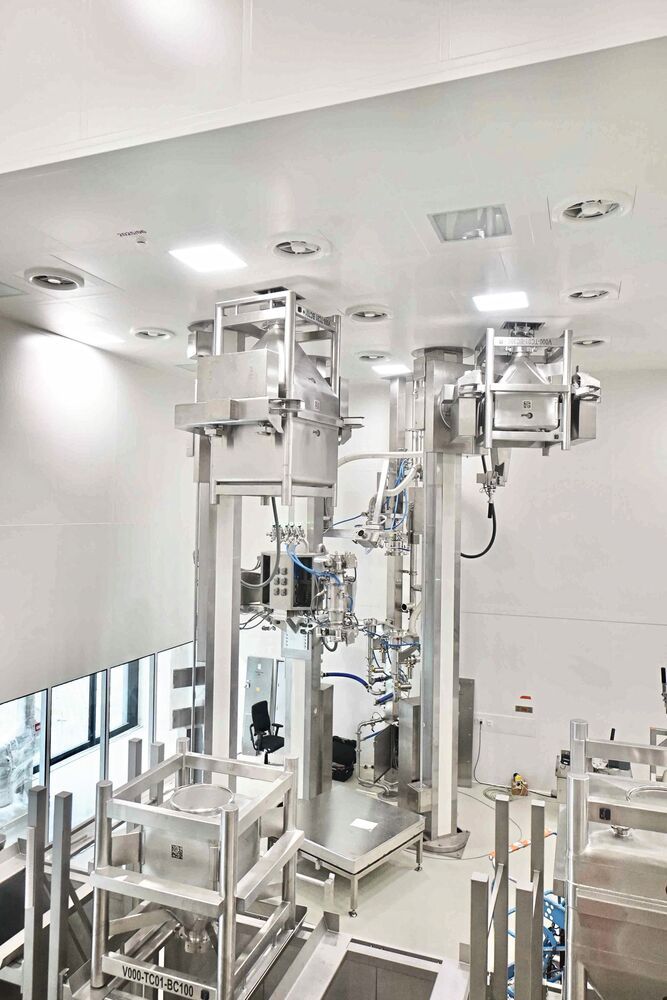
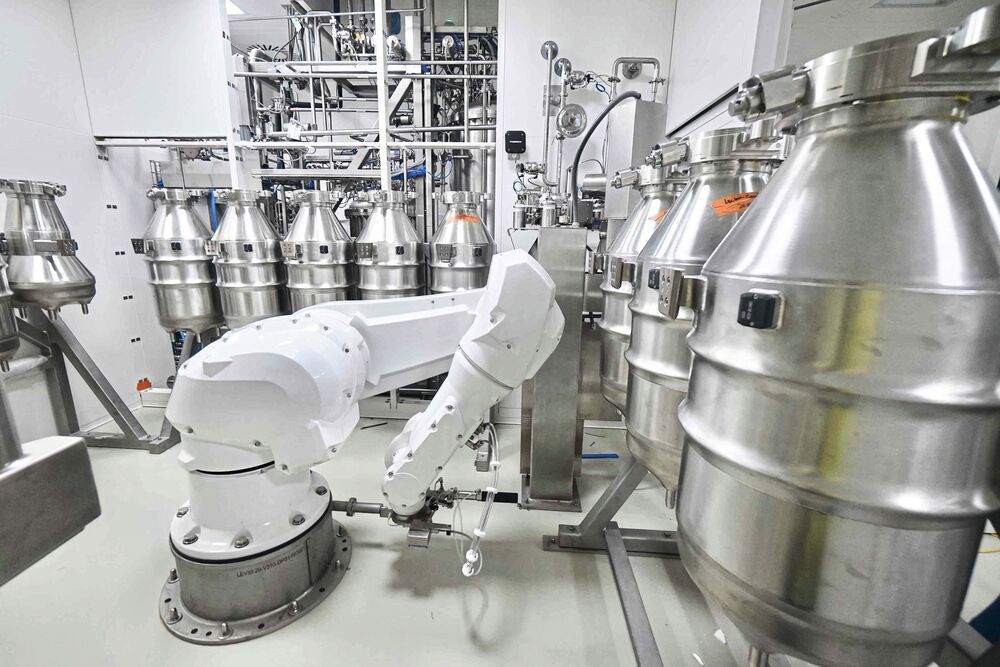
As a system integrator, Glatt has decades of experience and has developed more than one new solution for the production of pharmaceutical powders, including automation. Therefore, the team around Kopitzsch and Geier collaborated with the experts from Bayer, and six months later, “Karl” materialized as a system. The result is the Production Flow Control (PFC) system. It’s clear that the PFC requires a rethink. Unlike the classic batch process, characterized by a sequential succession of individual process steps, preferably in a vertically arranged system, the ballroom concept allows multiple batches to be processed simultaneously on one production level. “We see a paradigm shift in this concept. A batch is no longer the result of individual package units but the result of the entire production level,” explains Kopitzsch. For this, containers and barrels must be at the right place at the right time, without any operator intervention. A specially developed gate application tracks every movement: When does which container leave which room and enter the ballroom? This always allows for tracking which container was in which room at what time. On the shop floor, Autonomous Guided Vehicles transport containers and pallets through production to the Package Units – the PFC orchestrates bin locations, fill levels, time limits, and all other necessary information for fully automated production, similar to a conductor indicating the cues to his musicians with a baton.





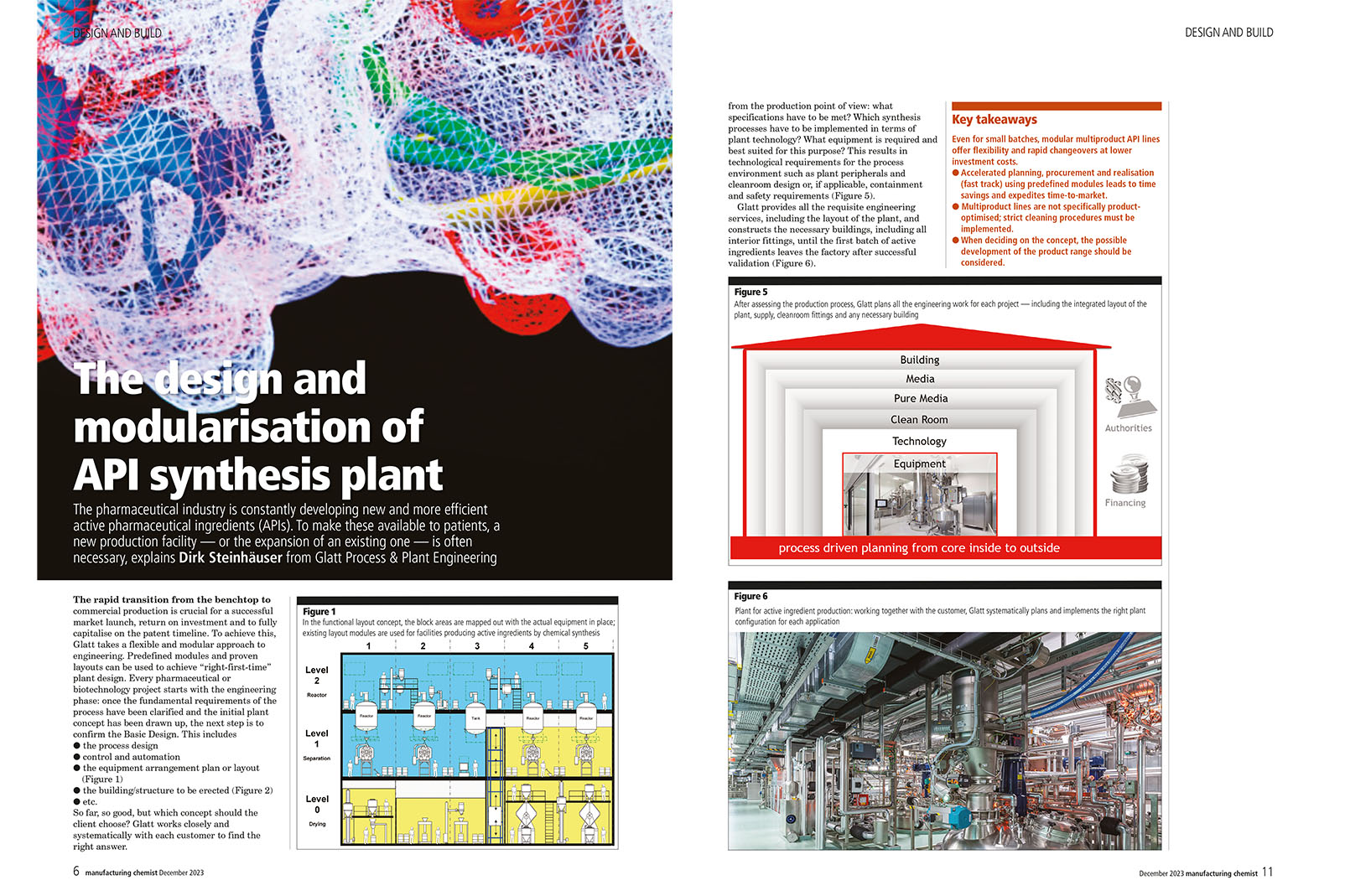
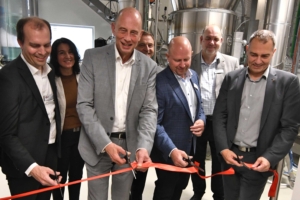
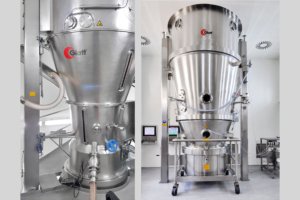

 Copyright by Bayer AG and ISPE
 Copyright: Glatt
 Copyright: Glatt; partially generated by AI
